

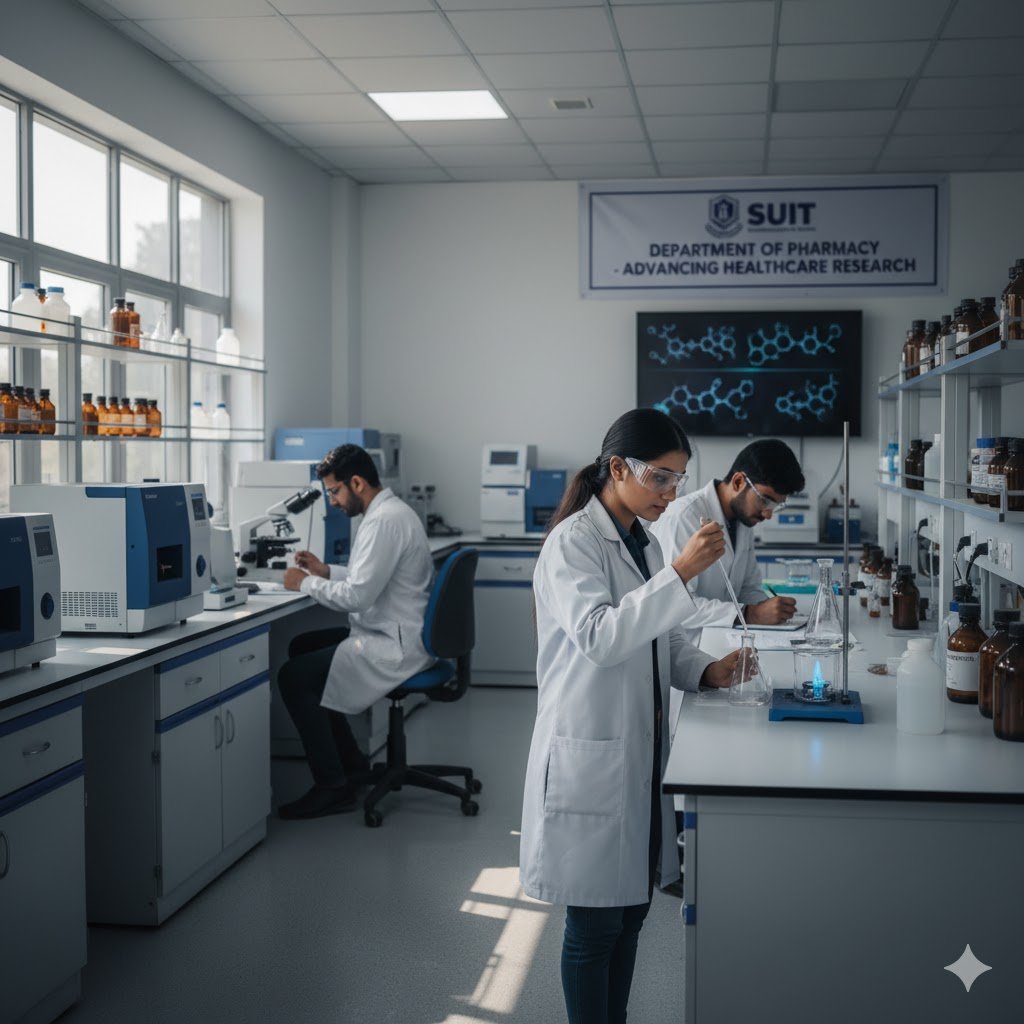
The Pharmacy Council of Pakistan (PCP) requires a five-year Doctor of Pharmacy (Pharm.D) degree followed by mandatory registration to legally practice clinical or industrial pharmacy.
Obtaining a license as a pharmacist involves rigorous academic training and strict adherence to the standards set by the Higher Education Commission (HEC). Sarhad University of Science and Information Technology (SUIT) provides a PCP-accredited pathway that aligns with international healthcare standards. This guide outlines the specific steps, academic requirements, and professional outcomes for aspiring pharmacists.
Core Academic Requirements for Pharm.D Enrollment
Prospective students must meet stringent eligibility criteria to enter an HEC-recognized program. The Higher Education Commission categorizes SUIT as a W-Category university, ensuring the highest level of academic quality and infrastructure.
- Higher Secondary School Certificate (HSSC): Candidates must complete Pre-Medical F.Sc with a minimum of 60% marks.
- Entrance Examinations: Most provinces require a standardized entry test to validate the candidate's proficiency in Biology, Chemistry, and Physics.
- Equivalence for International Students: Students with A-Levels must obtain an IBCC equivalence certificate confirming their Pre-Medical standing.
Check SUIT Pharm.D admission criteria and eligibility details here
The Five-Year Curriculum and Credit Hour Structure
The Pharm.D program at SUIT integrates theoretical knowledge with clinical clerkships. The curriculum follows the approved guidelines of the Pharmacy Council of Pakistan.
| Academic Year | Focus Area | Key Subjects |
|---|---|---|
| Year 1 | Foundational Sciences | Organic Chemistry, Physiology, Anatomy |
| Year 2 | Pharmaceutical Preparation | Pharmaceutics, Pharmacognosy, Biochemistry |
| Year 3 | Core Pharmacology | Pharmacology & Therapeutics, Pathology |
| Year 4 | Advanced Practice | Clinical Pharmacy, Industrial Pharmacy, Hospital Pharmacy |
| Year 5 | Professional Residency | Forensic Pharmacy, Medicinal Chemistry, Clerkships |
Accreditation and Quality Assurance (HEC & PCP)
Legal practice in Pakistan is impossible without a degree from a recognized institution. SUIT maintains full accreditation from the Pharmacy Council of Pakistan. This ensures that graduates are eligible for "Category A" registration, which is the gold standard for pharmacists in the country.
- PCP Approval: This validates the labs, faculty-to-student ratio, and hospital attachments.
- HEC W-Category: This ranking confirms the research output and institutional governance of Sarhad University.
- Institutional ROI: Graduates from accredited programs secure jobs faster in the public and private sectors due to the recognized quality of their training.
View the SUIT Department of Pharmacy faculty profiles and facilities
Mandatory Registration and Licensing Process
Completing the five-year degree is the penultimate step. To become a "Registered Pharmacist," graduates must follow the legal protocol for licensing.
- Step 1: Degree Verification: The HEC must attest the final degree and transcripts.
- Step 2: Internship Completion: Students must finish their clinical rotations at a recognized teaching hospital.
- Step 3: Provincial Pharmacy Council Application: Graduates apply to their respective provincial council (e.g., Khyber Pakhtunkhwa Pharmacy Council) for a Category-A registration certificate.
- Step 4: License Issuance: Once the council verifies the academic credentials and internship records, they issue a professional license number.
Career Prospects and Return on Investment (ROI)
The demand for registered pharmacists extends beyond retail pharmacies. The healthcare sector in Peshawar and Islamabad offers diverse roles for SUIT graduates.
- Hospital Pharmacists: Managing medication therapy in private and government hospitals.
- Production Pharmacists: Overseeing manufacturing processes in the pharmaceutical industry.
- Drug Inspectors: Serving as regulatory officers for the Drug Regulatory Authority of Pakistan (DRAP).
- Clinical Research: Conducting trials and pharmacological studies for global health organizations.
Explore Pharm.D scholarship opportunities and financial aid at SUIT
Frequently Asked Questions
What is the difference between Category A and Category B pharmacy licenses?
A Category A license requires a five-year Pharm.D degree, while Category B is for pharmacy technicians with a two-year diploma. Only Category A holders can work as clinical pharmacists, production managers, or drug inspectors in Pakistan.
Are Pharm.D graduates from SUIT eligible for government jobs through FPSC?
SUIT Pharm.D graduates meet all HEC and PCP criteria required for Grade-17 officer positions via the Federal Public Service Commission. The university’s accreditation ensures that degree holders can compete for roles in federal hospitals and regulatory bodies.
Can a registered pharmacist in Pakistan practice internationally?
Registered pharmacists from HEC-recognized universities can practice abroad after passing the specific licensing exams of their destination country. Common exams include the PEBC (Canada), NAPLEX (USA), and KAPS (Australia).
What financial support is available for Pharm.D students at Sarhad University?
SUIT offers merit-based scholarships and need-based financial aid to students who maintain a high CGPA throughout their five-year tenure. Applicants should check the latest scholarship circulars during the fall and spring admission cycles.